


Kia Ora!

In this newsletter –
Hot tip of the month – Fuel-saving basics
Did you know – The 80/20 rule of our body
First-home buyer tips – Now is a good time to buy
Property – Sales are down slightly compared to last year
Investments – Cashing in? Get advice first
Banks – Due to fix your mortgage? Play it safe in uncertain times
Reserve bank – OCR holds steady at 2.25%, but with an uncertain outlook
Insurance – Our insurance support is changing
Business – How to maintain your profit margin despite high fuel costs
Hot tip of the month
Fuel-saving basics
We’re probably all experts in fuel efficiency at this point, but just in case, here are our fuel-saving tips.
Five ways to get more mileage out of your tank:
- Practice smooth driving: Gentle acceleration and braking can significantly improve fuel efficiency
- Check your tyres are properly inflated
- Remove unnecessary weight from your car
- Plan trips to combine errands and avoid peak traffic
- If possible, consider carpooling or using public transport a few days a week.
Four ways to reduce home gas use
- Lower the water heater temperature
- Turn off under-floor gas heating
- Check for and fix leaks
- Use energy-efficient appliances.
Did you know?
The 80 / 20 rule of our body
Your brain uses about 20% of your body’s energy, despite making up only around 2% of your weight – most of it just to keep you alive and thinking, not actively “working harder.” Makes me wonder what we are doing with the remaining 80% of our body’s energy.

First-home buyer tips
Now is still a good time to buy
Access to low-deposit lending through the banks is still helping many first-home buyers get a foot on the ladder. First home buyers make up over 27% of property purchases nationwide.
Global uncertainty is likely to shape market conditions through 2026 and may push mortgage rates up. Our advice remains the same; if you are in the market to buy, consider doing so sooner rather than later.
If you’re hoping to buy a house soon but think you’re not yet able to, let’s talk: we’ve had many clients who have managed with Elise’s expert advice to buy a home sooner than they expected!
Thoughts from Elise
I hope everyone is staying warm and dry as we head into the last month of Autumn, and the days get colder and shorter.
I have been flat out over the last two months supporting clients. It’s been extremely rewarding, but at this pace, I’m looking forward to additional support from 1st of May to improve my turnaround times. To that same end, I’m working on an exciting change to operations; I hope to have an announcement in the next month.
On the personal front, the renovations are back underway at home. I’m working on some minor projects, like new steps for easier access into the property, and a wardrobe in the guest room in preparation for my mum, who is moving in with us.
I’m heading over to Aussie on the 7th of May to assist my mum with the final part of the move, arriving back in New Zealand on the 17th of May. I will be available on phone and email during this time.

Property
Sales are down slightly compared to last year
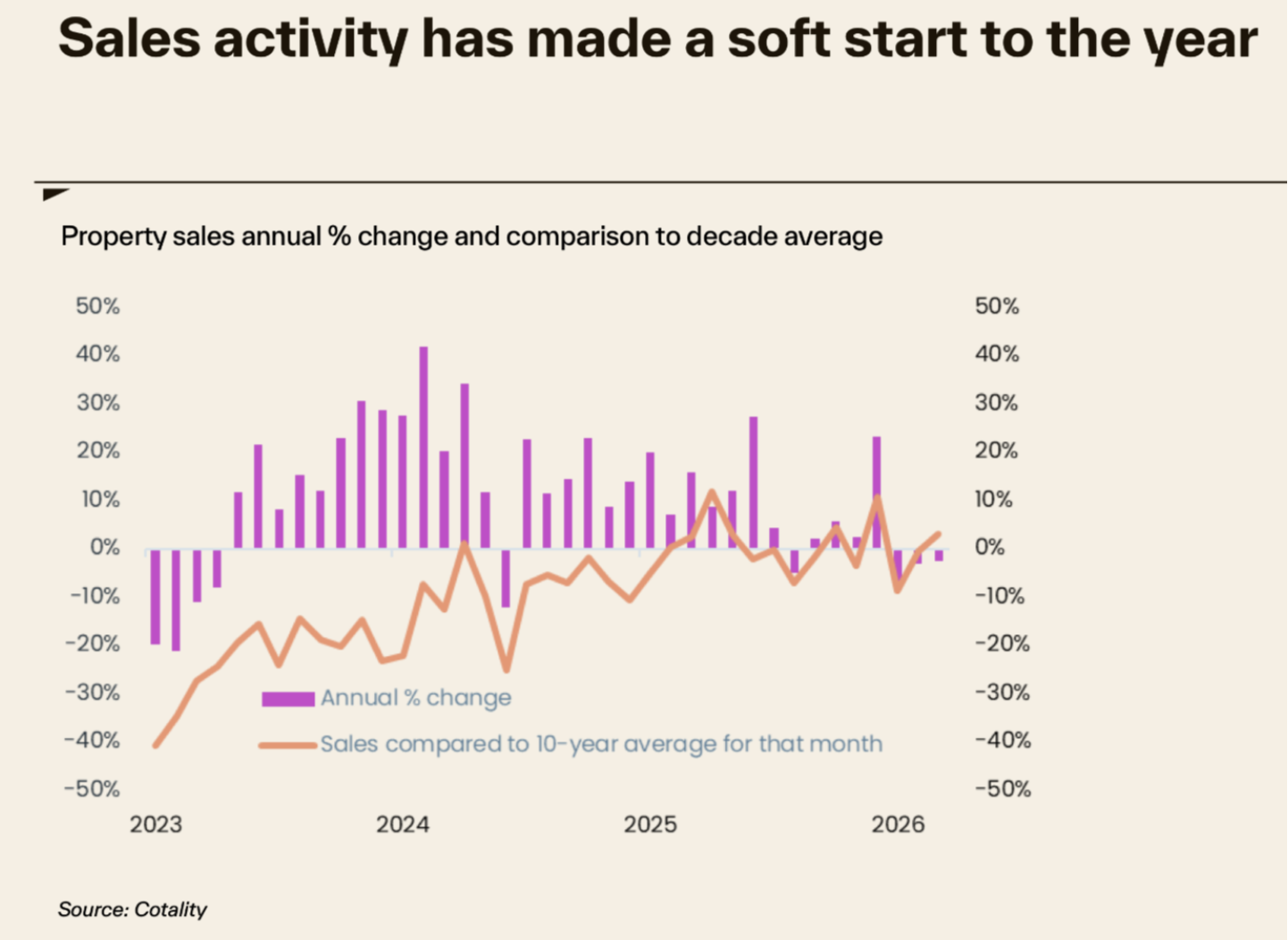
Housing market activity remained subdued in March, with sales down around 2% compared to the same time last year. This marks the third consecutive monthly decline, following drops in January and February.
While the decreases are relatively modest, they point to a slow start to the year and continued caution from both buyers and sellers.
Looking ahead, global uncertainty is likely to weigh on the market in the short term. Consumer confidence has already weakened, and mortgage rates are edging up, which could keep demand soft.
Investments
Cashing in? Get advice first
Markets have been unsettled recently, with tensions in the Middle East pushing up fuel costs.
For investors, this can mean short-term ups and downs, but for long–term investments like Kiwisaver, don’t sweat the current balance. Keep contributing to reap the benefits when the market recovers.
For those who wish to ensure their money is invested ethically, now is a good time to review the ethical investment policies of your KiwiSaver and managed funds. If you aren’t comfortable with your current fund policies, there are options. Some providers, like Booster, offer socially responsible funds.
If you have investments you plan on cashing in in the near term, talk to Elise for advice on the best approach in this tumultuous time.

Banks
Due to fix your mortgage? Play it safe in uncertain times
With a global fuel crisis and an unpredictable USA causing havoc in the global economy, it is harder than ever to predict interest rates. Even the top economists are less aligned than usual.
Interest rates rose by 0.1% – 0.2% in April; further increases are expected should the fuel crisis continue.
So, to give you as much certainty and security as possible, it is safest to fix for between 2 and 3 years if you don’t plan to make any changes to your mortgage over the period, however what is right for you will depend on your plans and we have saved $5K-$100k of interest for clients, doing refixes recently by shuffling the loan structures.
Take the time to consider what you hope to be doing over the next two or so years and identify if it will affect your mortgage.
If you have a mortgage account due for refix, contact Elise to talk through the options.
Reserve Bank
OCR holds steady at 2.25% but with an uncertain outlook
On 8 April, the Reserve Bank of New Zealand (RBNZ) announced the OCR would remain at 2.25%.
The current conflict in the Strait of Hormuz and the resulting fuel crisis are adding short-term inflationary pressure.
If the situation is resolved in the near term, the Reserve Bank is unlikely to need to raise the Official Cash Rate (OCR) early. Instead, existing spare capacity in the economy should gradually bring inflation back within the target range. However, there is no sign of resolution anytime soon; if it goes on for an extended period, we will certainly see the OCR go up. Despite this they have indicated that we can expect 3 rate hikes before the end of the year.
The next OCR review announcement is scheduled for 27 May.

Insurance
Our insurance support is changing
Gordon has moved on; we wish him all the best. Not to worry; Elise is handling any insurance work and will have support in this space soon.
Individual emails will be sent to clients to advise them of the new arrangements.
If you need insurance advice, Elise can help. Email elise@bob.kiwi.nz for a consultation.
Business
How to maintain your profit margin despite high fuel costs
The increase in fuel prices is affecting many small businesses. A proactive approach can help protect profitability while keeping your business running smoothly.
In the first instance, Elise recommends you:
1. Tighten route and delivery planning
Review how your vehicles are used day to day. Combining trips, optimising delivery routes, and avoiding peak traffic can significantly cut fuel use. Communicate your expectations to staff regarding fuel use. Even small efficiency gains add up over time.
2. Improve vehicle efficiency
Simple maintenance—like keeping tyres properly inflated and servicing engines regularly—helps reduce fuel consumption. Encouraging smoother driving habits across your team can also lower costs without any upfront investment.
3. Review pricing and operations
If fuel is a major expense, it may be time to adjust pricing, introduce delivery fees, or set minimum order values. At the same time, look for ways to reduce travel altogether, such as offering virtual services or consolidating supplier orders.
We are always available for a chat about your situation. Book a meeting or send us an email.
Until next time, Elise and the Team